On an Argentine steakhouse menu the names arrive in Spanish and all sound related. In fact bife de chorizo, entraña and lomo come from three different parts of the animal, have three different textures and ask for three different cooks. Knowing which one you are ordering is the simplest way not to be disappointed.
Bife de chorizo: the cut you recognise by its fat
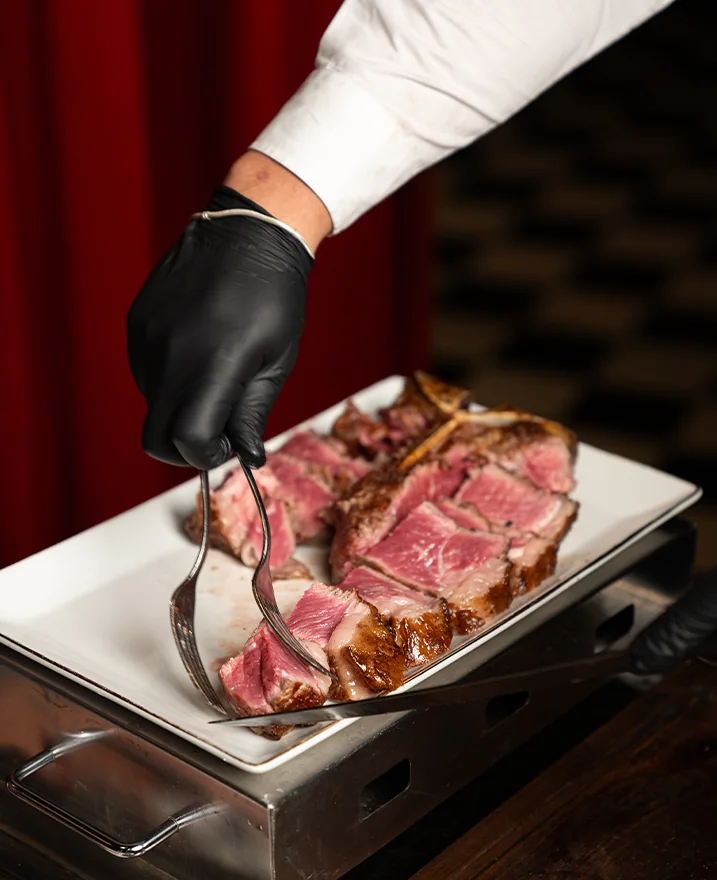
Bife de chorizo is striploin, the cut sold in Italy as controfiletto and in the United States as strip steak. It is wide and compact, with a rim of fat on one side that melts during cooking and bastes the meat. Its grain is short and even: it slices easily and stays juicy even at medium.
Over embers it wants strong heat to seal the surface, then a few more minutes to reach the point. It is the most restaurant-ready of the three: it presents well, holds the plate and needs no sauce. The outer fat should stay: it is part of the flavour.
Entraña: fibre, flavour, a short cook
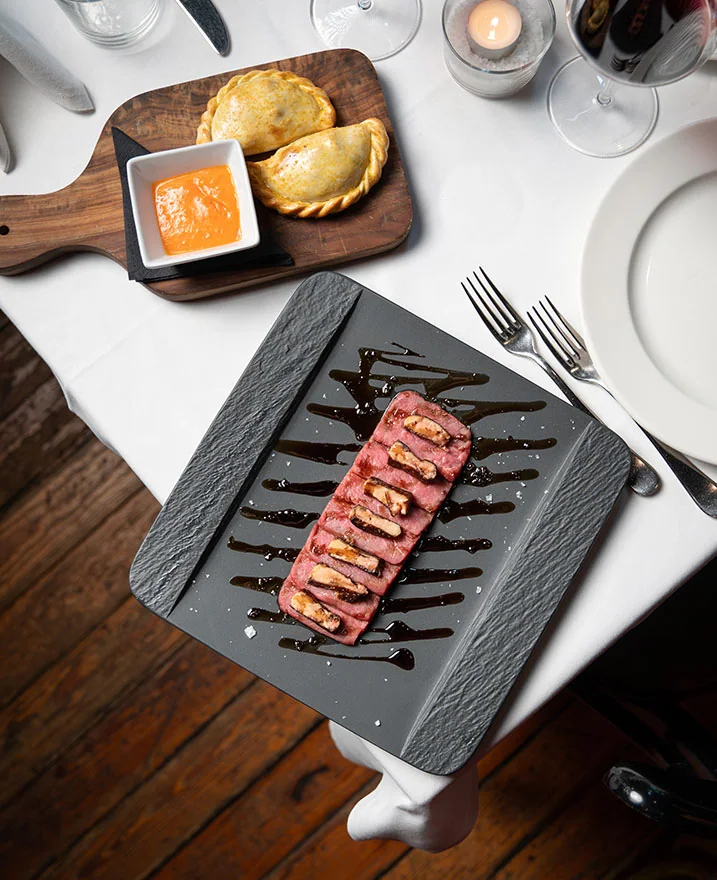
Entraña is the diaphragm, a thin, elongated muscle also sold as skirt steak. It has a long, visible grain, a flavour more intense and minerally than bife, and a texture that does not forgive overcooking: too long over the embers and it turns dry and chewy.
It is usually served medium, sliced against the grain, with a little chimichurri alongside. It is the cut for anyone after flavour rather than tenderness, and in Argentina it is among the best loved for exactly that. It costs less than lomo and says much more.
Lomo: tenderness has a price
Lomo is tenderloin: the animal's innermost, least used muscle, lean, with no visible fat and a very fine grain. It is the tenderest of the three and also the most delicate: the flavour is subtle and the cooking must stay low, or it dries out.
In Argentina it is often ordered as lomo at medium, or in medallions. It is the right cut for anyone who dislikes fat and wants soft meat; it is the wrong cut for anyone after the strong taste of entraña or the crust of bife. It is not a question of quality: it is a question of expectations.
In Argentina doneness is asked for out loud: jugoso, al punto, cocido. Jugoso means still red at the centre, al punto is medium, cocido is well done. For entraña and bife medium is the most common request; for lomo it is worth staying one degree below, because tenderloin tends to dry out.
How to choose
If you want a wide plate to share, bife de chorizo is the safest choice. If you want intensity and do not mind the grain, entraña is the cut you will remember. If you want soft, discreet meat, lomo is the right one. At El Porteño all three live on the same menu: the difference shows at the first bite.