Asado begins long before the meat. Wood or charcoal burns until the flame dies down and only embers remain: red, covered in pale ash, steady. Whoever cooks asado does not put meat over live fire; they put it over embers. That distance is what allows a long cook without burning the outside.
The meat is salted first, with coarse salt, and then left alone. It is not pierced, not turned constantly. In Argentina the parrilla often has embers below and radiant heat around: the cut cooks by radiation, not by direct contact. The result is a thin crust and an interior that stays moist.
The cuts, the timings
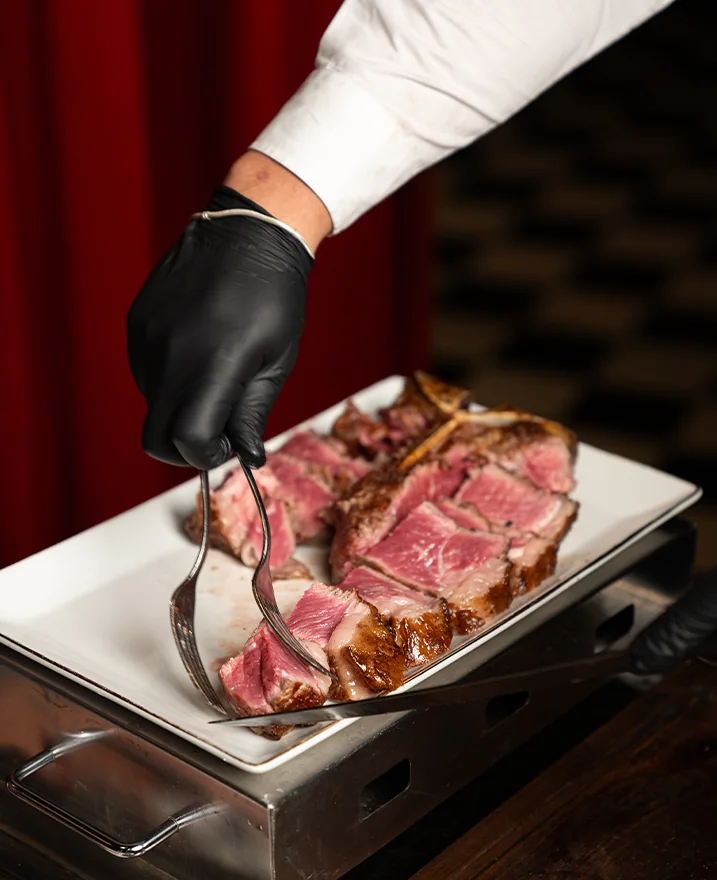
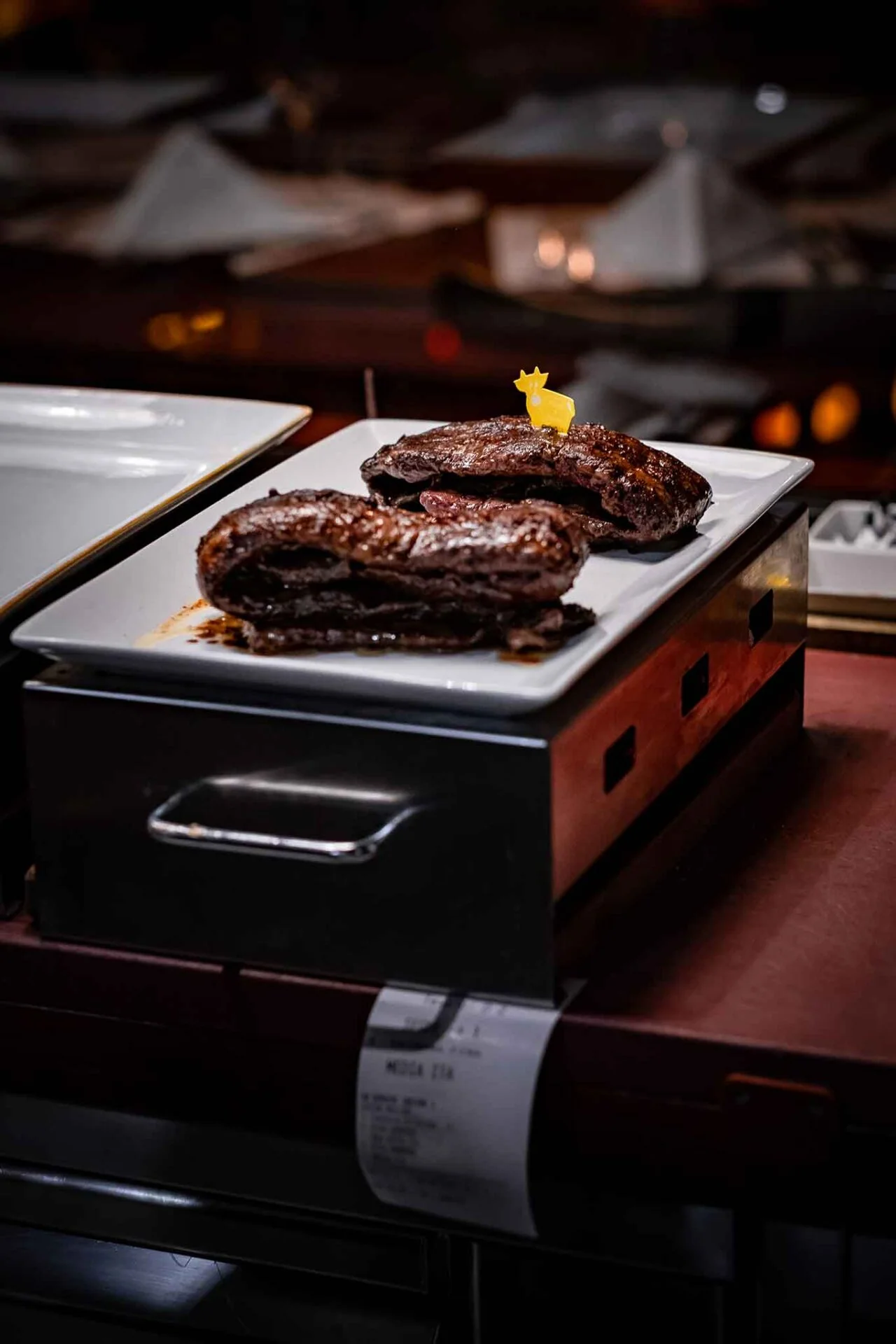
Asado is not one cut: it is a family of preparations. Asado de tira is beef rib, cooked in strips and served on the bone; vacío is flank, more fibrous; entraña is skirt, to be cooked quickly. Alongside the beef come chorizo, morcilla, achuras — sweetbreads, intestines, kidneys — and vegetables over the embers.
Every piece has its own time. A chorizo warms through and colours; an entraña wants a hotter fire and a few minutes; a costillar can stay over the embers for hours. There is no single timer: there is the point, which you look at and touch. That is why asado is not learned from a video, but by standing next to someone who cooks it.
Il fuoco si governa spostando le braci, non abbassando una manopola. Se un pezzo colora troppo, si sposta verso il bordo della parrilla; se serve più calore, si aggiungono braci sotto. È un mestiere di mani e di occhi, e per questo in Argentina il parrillero è una figura rispettata: non è chi accende il fuoco, è chi lo tiene.
What it is not
Asado is not a quick grill over a high flame, it is not meat marinated for hours, and it is not a sauce that covers the flavour. Chimichurri goes on the table, not on the embers: garlic, parsley, oregano, vinegar and oil, fresh and green. The meat reaches the table with its salt and its smoke, and whoever wants to can add to it.
The table
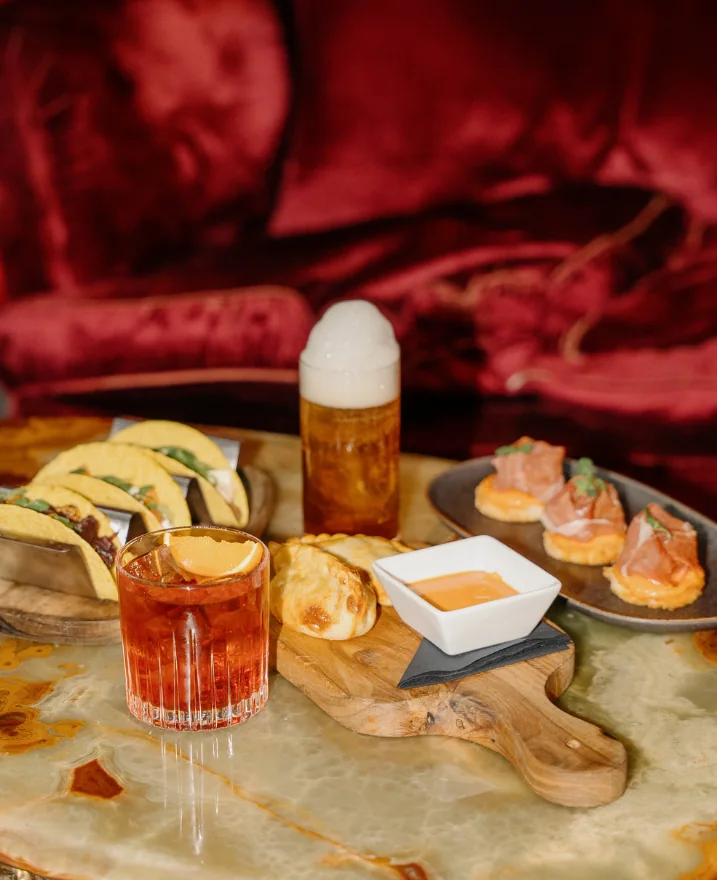
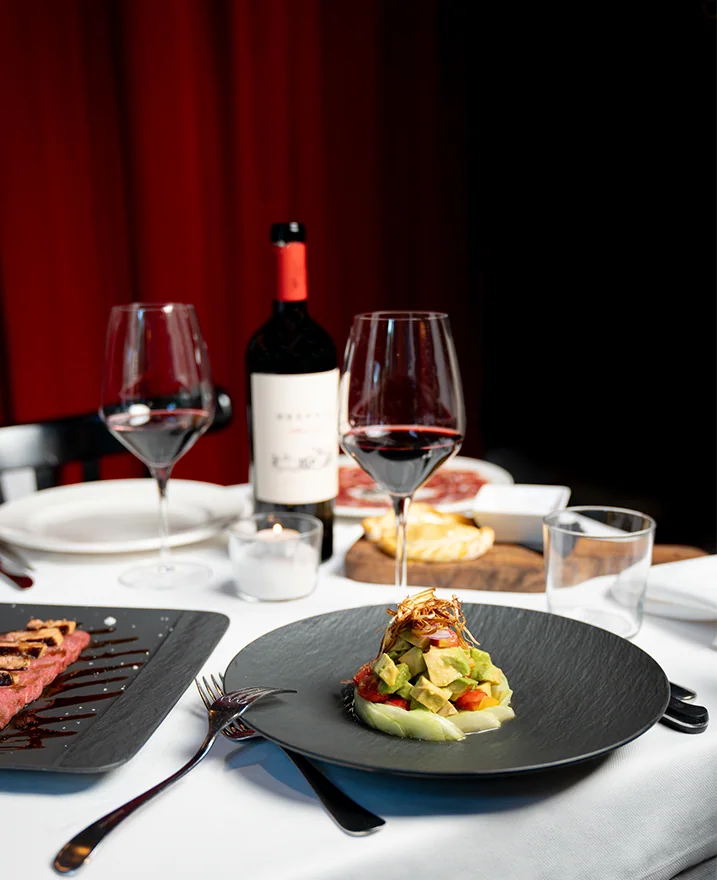
Asado is also a way of being together. It starts with a picada, continues with the cuts, and ends with the sobremesa, the time spent at the table without ordering anything else. The wine is red, often Argentine; bread is on the table; dishes do not all arrive at once, they follow the fire.
Asado is not served: it is shared.
At El Porteño the parrilla is at the centre of the room in every venue. The cuts that have returned to the menu for fifteen years are bife de chorizo, ojo de bife and asado de tira, with costillar and mollejas alongside. The method does not change between Milan, Rome and Porto Cervo: the pace of the evening does.